
Do you need a permit for a portable toilet in League City?
Usually not, if the unit sits on private property, on a driveway, or inside a fenced job site. That covers most home renovation jobs and most backyard events. The question gets harder the moment a unit needs to sit at the curb, on a public sidewalk, or anywhere close to a street in League City. Right of way placement is the trigger point almost everywhere, and it is not verified here what League City's exact process requires, so we confirm it with the city on your behalf before the truck rolls. Porta potty rules and regulations vary by city and by county, which is exactly why we do not guess at League City's process from a rule we read somewhere else. If you are running a construction site services job, your general contractor may already have this sorted with the city; ask before you order. Homeowners doing a home renovation porta potty rental almost never trigger a permit if the unit stays on the property. Event organizers planning a wedding restroom rental or a festival restroom rental on private land, a rented hall lot, or a park should still ask the venue directly, since some venues layer their own rules on top of the city's. If you searched for portable toilet rental Delaware or Delaware porta potty rental and landed here, note that placement rules run by city and county, so what applies in League City will not match Delaware's process, and you should confirm locally either way.
What are the placement rules for portable toilets?
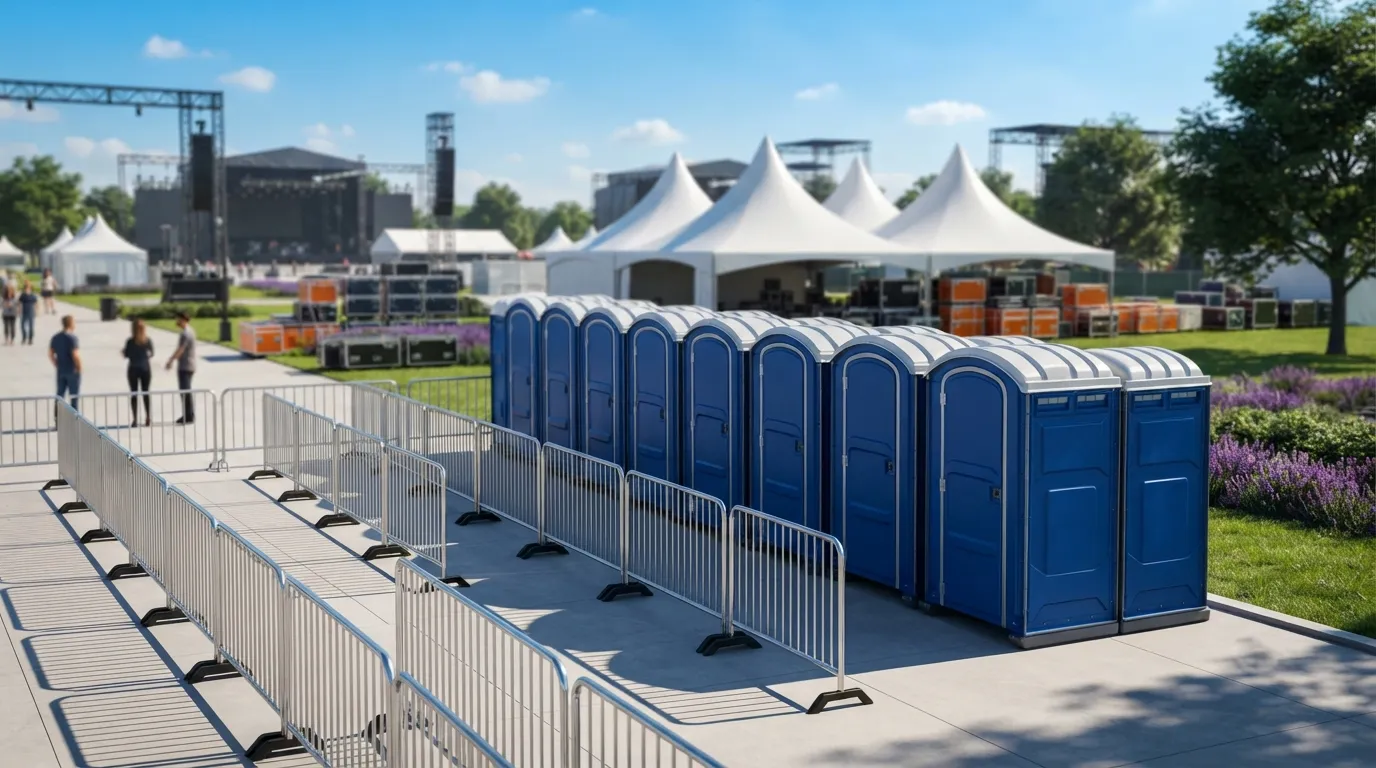
Placement rules exist to keep units stable, accessible, and out of the way of work. A unit needs firm, level ground; ADA Standards section 302.1 calls for stable, firm, slip-resistant surfaces, which matters most on job sites near Dickinson, 5.9 miles southeast of League City, where soil after a rain can turn soft fast. Keep a clear path to the door. ADA Standards section 403.5.1 sets a 36 inch minimum clear width on any accessible route, and section 404.2.3 requires a 32 inch clear door opening on the unit itself. If you are ordering an ADA accessible porta potty for a public event, section 213.2 requires that at least 5 percent of clustered units be accessible, never fewer than one. Our porta potty placement guide walks through ground conditions, service truck access, and distance from work areas in more detail. A standard unit runs about 44 by 48 inches on the ground and stands roughly 92 inches tall, so give it real clearance, not just a gap.
Why do dumpster placements need a permit more often than porta potties?
Dumpsters usually sit heavier, longer, and closer to the street than a toilet does, which is why cities watch them harder. A roll-off dumpster rental placed on a driveway is generally fine without a permit. One placed at the curb or in a street lane is a different conversation, and that is the same right-of-way line that applies to porta potties. Our dumpster permit requirements page covers this in more depth, and it is worth reading before you book a 10 yard dumpster rental, 20 yard dumpster rental, 30 yard dumpster rental, or 40 yard dumpster rental. Delivery trucks need about 60 feet of straight clearance behind the drop point, which rules out a lot of tight street placements anyway. Weight limits matter too; check dumpster weight limits and what cannot go in a dumpster before loading. The same right-of-way question comes up if you're setting a temporary power pole or a light tower near a public sidewalk in League City; a temporary power pole permit is a separate approval from a dumpster or toilet placement, so check with the city on that specifically, since power equipment near foot traffic tends to draw more scrutiny than a toilet does. Cities handle this differently everywhere, too; a roll-off dumpster rental Delaware crew or a jersey city dumpster permit office will not apply the same rule League City does, so always confirm with the city you are actually working in.
When do OSHA rules apply instead of city permit rules?
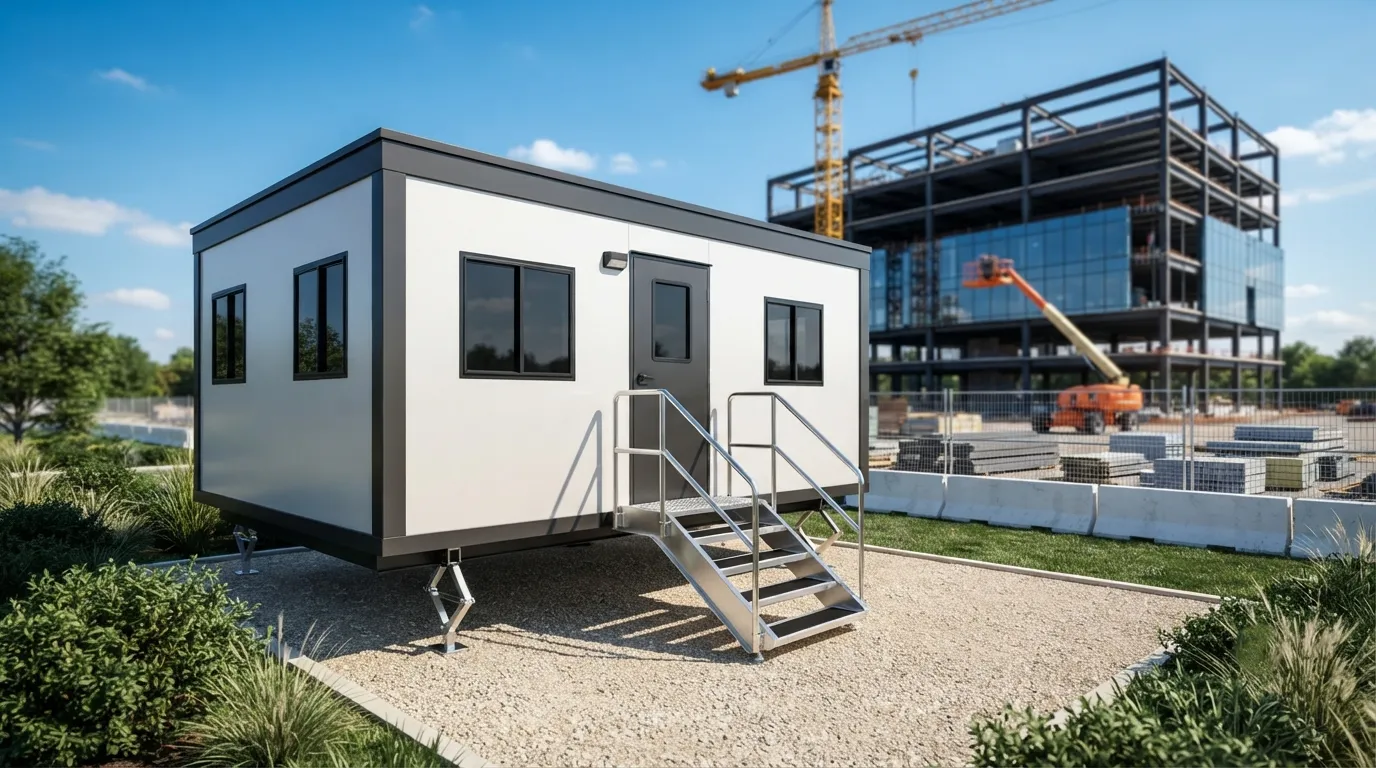
OSHA rules apply on job sites with employees, and they are about counts and access, not street placement. OSHA 1926.51(c)(1) sets construction toilet ratios: one facility for 20 or fewer workers, then one toilet seat and one urinal per 40 workers up to 200, and one per 50 workers beyond that. That is a federal labor rule, separate from anything League City's permitting office handles, and it applies whether or not the units sit in a right of way. Our how many porta potties do I need guide runs the math for your crew size. For agricultural crews, OSHA 1928.110 sets a different bar: one facility per 20 hand-labor employees, reachable within a quarter mile walk. Full detail lives on OSHA portable toilet requirements and farm and agricultural restrooms. None of this substitutes for the city's own placement rules; the two run on separate tracks, and a site can satisfy OSHA counts while still needing to sort out curb placement with the city.
Does a residential backyard rental ever need a permit?
Almost never, if the unit stays fully on your property. Driveways, side yards, and fenced backyards are the easiest placements. The moment a unit needs to sit on the street or block a sidewalk for a party, ask the city first. Most event restroom rental bookings on private land clear this bar with no paperwork at all.
What is the ANSI standard for how often units get serviced?
ANSI/PSAI Z4.3 sets a baseline of one service visit per week for up to 10 users across a 40 hour week. Busier events need more frequent visits. See how often are porta potties cleaned for how that scales with headcount and event length.
Do construction sites need a different toilet count than events?
Yes. Construction counts follow OSHA 1926.51(c)(1) by worker headcount, while events are sized by attendance and hours, not a labor standard. A festival and a job site with the same number of people on hand can need very different unit counts. Check construction dumpster rental and construction site services for the job-site side.
Can I place a dumpster on the street without checking with the city first?
No, not safely. Street placement almost always needs city sign-off, unlike a driveway placement. Confirm with League City before delivery day, especially for a 30 yard dumpster rental or larger, since a 60 foot straight clearance behind the truck rarely fits a normal street lane.
Does a handwashing station need its own permit?
Generally no, if it sits alongside a portable toilet on private property. 29 CFR 1910.141(d)(2) requires soap and towels or a hand-drying device at the station; hand sanitizer alone does not meet it. See handwashing station requirements for full detail.
Next step
Get a delivery date
Tell us the address, the dates and the headcount. We size the order and confirm the route.