
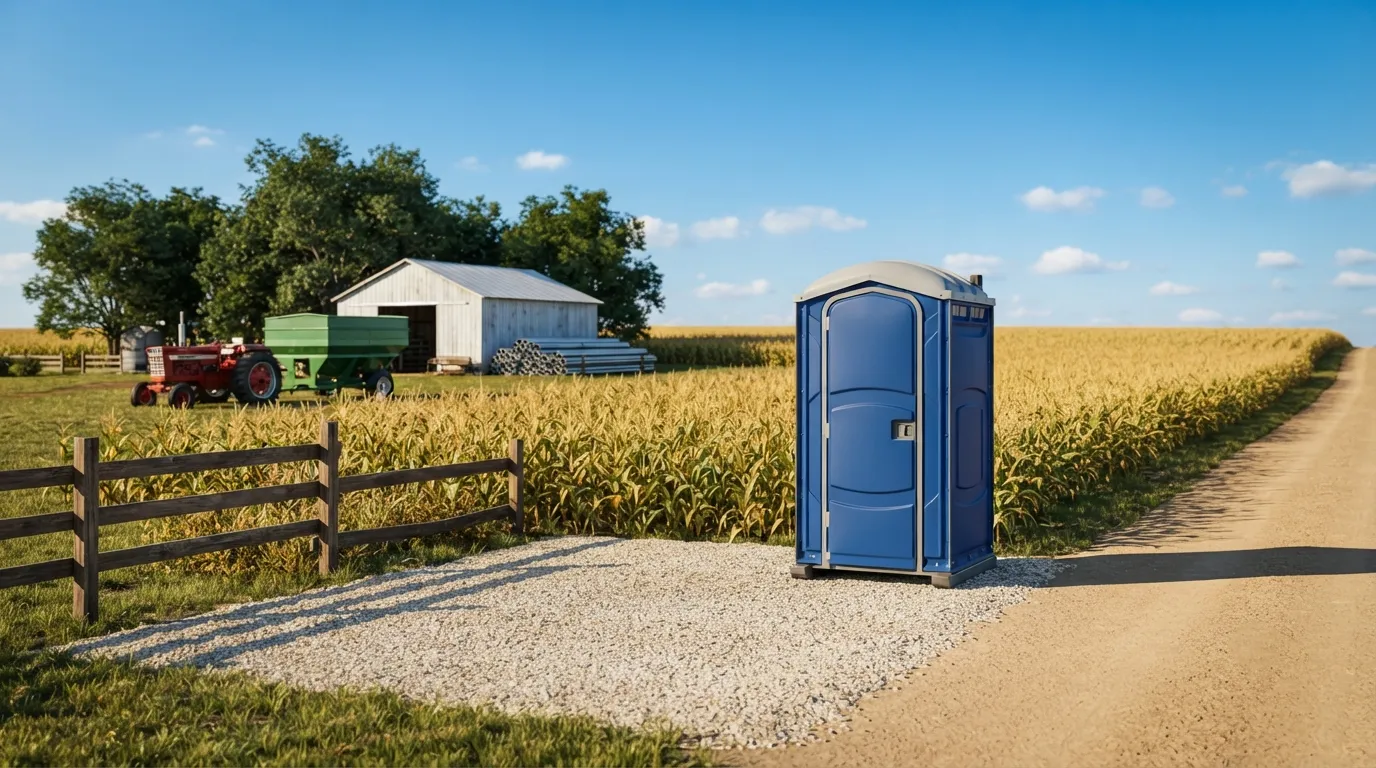
How many portable toilets does a farm need?
Start with the headcount, not the acreage. OSHA 1928.110 sets the baseline for agricultural hand-labor work: one facility per 20 employees, and it has to sit within a quarter mile of wherever the crew is working, not back at the barn. That last part trips up a lot of League City operations, because fields spread out and one unit at the entrance doesn't cover a crew working the far end. If your rows run long, you may need two or three standard porta potty rentals staged at different points, moved as the work moves. Potable water also has to be on hand under OSHA 1926.51(a)(1), so pair the toilets with a handwashing station rental or a portable sink rental rather than relying on jugs somebody forgot to refill. For a seasonal harvest with 15 to 20 workers, one standard unit placed centrally usually clears the ratio. Bigger operations with 40 or more hands split into crews should read our guide on how many porta potties you need before committing to a delivery schedule, since the answer changes with crew layout more than it does with total worker count.
What does a farm restroom rental cost in League City?
A standard unit runs in the range shown below for the length of a harvest or growing season, and pricing depends mostly on how long you keep it and how many stops your service route needs.
| duration | low | typical | high |
|---|---|---|---|
| day | $100 | $150 | $350 |
| week | $130 | $200 | $500 |
| month | $125 | $200 | $325 |
Most farm accounts land on a monthly rate since planting-to-harvest work stretches well past a single week, and our monthly porta potty rental page breaks down what changes at that length. A one-off delivery fee applies separately, and if your fields sit past our standard route, that fee scales with distance, similar to the extra mileage covered when we serve Texas City 19.1 miles east or Baytown 26.2 miles northeast. For crews that want the numbers side by side before calling, porta potty rental cost and porta potty rental per day cover the same bands from a different angle. Ranches running livestock alongside crop work sometimes add a temporary fence rental around the unit to keep animals clear, which is a small add-on most farm customers don't think of until the first week.
Do farm restrooms need to be ADA accessible?
Not always, but check your crew makeup before you skip it. ADA Standards apply where the public or a mix of workers with disabilities will use the units, and when single-unit portable toilets are clustered, ADA Standards section 213.2 requires at least 5 percent to be accessible, with a minimum of one no matter how small the cluster. A County Fair booth, farm stand, or agritourism event open to visitors is a different situation than a closed field crew, and it pushes you toward an ADA accessible porta potty rather than a standard model. Accessible units need a 60 inch turning circle per ADA Standards 304.3.1 and a clear route at least 36 inches wide under ADA Standards 403.5.1, so placement on uneven farm ground takes some planning; our porta potty placement guide covers stable, level footing under ADA Standards 302.1. If your operation runs a seasonal market or a county fair restrooms style event on the same property, that public-facing piece is where accessibility rules actually kick in, separate from the labor-crew requirement under 1928.110. When in doubt, order one accessible unit alongside your standard fleet and you're covered either way.
Farms running larger events, like a fall festival or an on-site wedding venue, should look at event restroom rental or wedding restroom rental instead of the labor-crew setup, since crowd counts change the math entirely. Operations with year-round hired hands, not just seasonal crews, sometimes upgrade to a restroom trailer rental for a cleaner setup near a bunkhouse or equipment yard. League City properties running septic systems for a farmhouse or processing shed should also keep an eye on tank service; a residential-scale tank is typically pumped every 3 to 5 years depending on size and household load, and our septic pumping service and how often to pump a septic tank pages walk through the interval in more detail.
How often are farm porta potties serviced?
The industry baseline under ANSI/PSAI Z4.3 is one service visit per week for up to 10 users across a 40 hour week. Farm crews working longer days or larger headcounts often need twice-weekly service. See how often are porta potties cleaned for how that scales with crew size.
Can I move the unit as the crew moves fields?
Yes, and for spread-out acreage it's often necessary. OSHA 1928.110 requires the facility stay within a quarter mile walk of the crew, so a single fixed unit rarely covers a whole property. Ask about relocation when you book.
Do I need handwashing separate from the toilet?
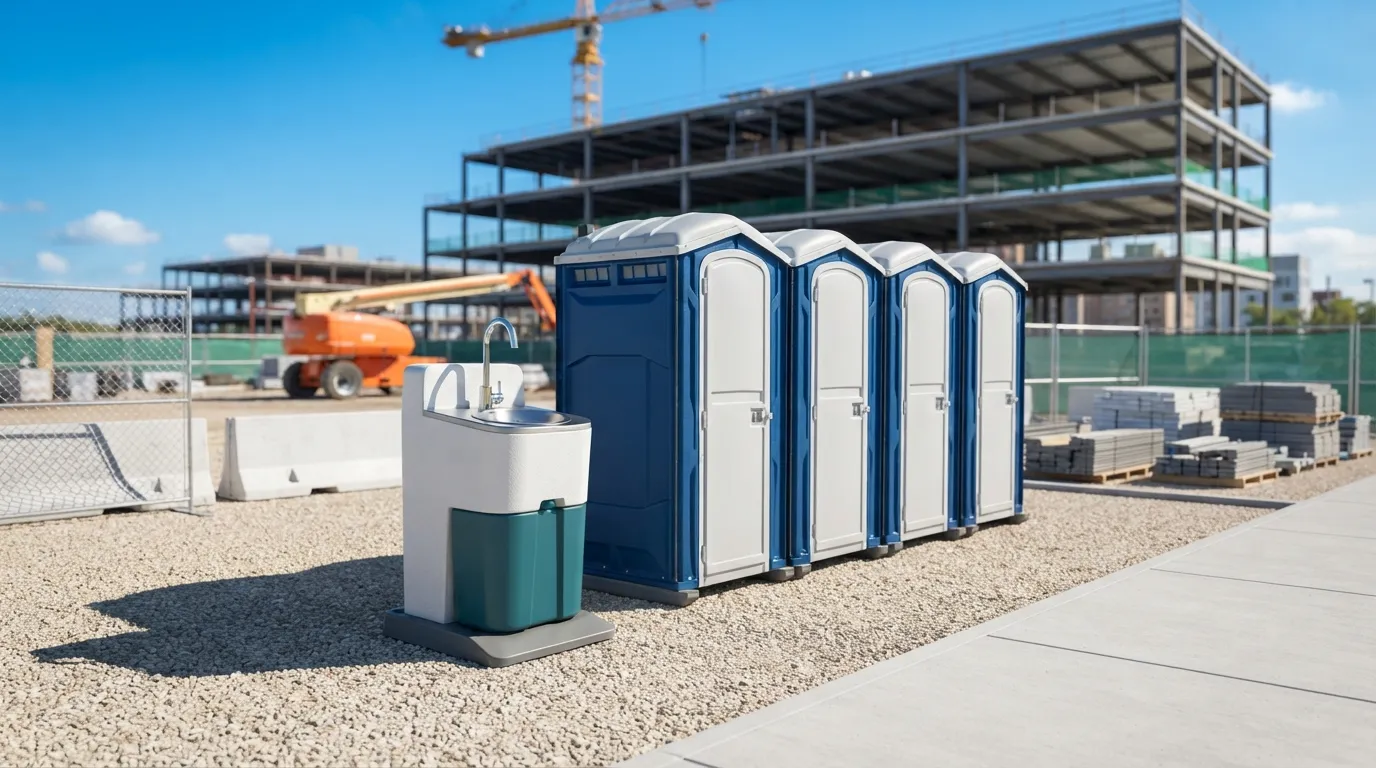
Yes. OSHA 1926.51(a)(1) requires potable water on site, and 29 CFR 1910.141(d)(2) requires soap and towels or a hand-drying device, not sanitizer alone. Pair a toilet with a handwashing station rental.
What if pesticides or herbicides are used on site?
Washing facilities are required under OSHA 1926.51(f)(1) specifically where workers apply pesticides, herbicides or other contaminants. That's a separate requirement from general field sanitation, so budget for both.
Is there a minimum rental length for farm accounts?
No fixed minimum, but daily rates cost more per day than a week or month. Seasonal farms in League City typically save by booking monthly porta potty rental instead of renewing weekly.
Next step
Get a delivery date
Tell us the address, the dates and the headcount. We size the order and confirm the route.